Lessons Written in Base Pairs: A Brief History of Genomic Data Incidents and the Case They Build
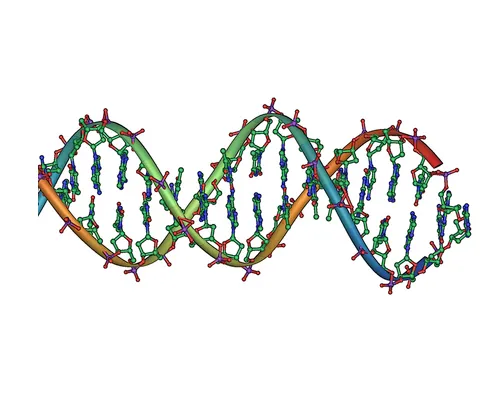
Photo: Jerome Walker, Public domain, via Wikimedia Commons
Scope and Method
This paper surveys five widely reported incidents involving the security or governance of genetic data in the United States, drawing on company disclosures, regulatory filings, and legislative records. The purpose is not to catalogue every breach but to identify the policy trigger each incident created — and to test a hypothesis: that incremental responses have accumulated into a case for comprehensive federal legislation that remains, for now, unenacted.
Incident One: The Golden State Killer and the Forensic Loophole
In 2018, investigators identified Joseph James DeAngelo as the Golden State Killer by uploading crime-scene DNA to a public genealogy database and locating distant relatives. The technique solved a decades-old case and inaugurated the era of forensic genetic genealogy. It also exposed a governance gap: relatives who had uploaded their DNA for genealogical curiosity had, unknowingly, provided a probabilistic identity for family members who never consented to anything.
Policy response: The Department of Justice issued interim and then permanent rules in 2019 governing forensic genetic genealogy by federal agencies, restricting uploads to databases whose terms permit law enforcement use and requiring supervisory approval. State and local agencies adopted uneven practices. Notably, no federal statute constrains the practice for state investigations.
Incident Two: Insider Misuse at a Consumer Testing Company
In 2017, a consumer genomics company disclosed that an employee with database access had been found searching for the profiles of public figures. The company stated that no data left its systems, but the incident illustrated a category of risk that encryption-at-rest cannot address: the authorized insider. Genetic databases concentrate extraordinarily re-identifiable data under the control of ordinary employees with routine access.
Policy response: The incident prompted internal access-logging reforms and industry discussion of insider threat programs. It received little legislative attention — a pattern this paper returns to below.
Incident Three: The Third-Party API Exposure
Around 2020, several platforms confronted vulnerabilities in third-party integrations — fitness apps and ancestry tools that shared user data through application programming interfaces with weak authentication. In one widely reported case, researchers demonstrated that a partner application could enumerate user email addresses. Genetic data itself was not exposed, but the linkage between genomic profiles and identifying contact information was.
Policy response: The Federal Trade Commission's enforcement posture toward consumer genomics hardened, culminating in a 2021 complaint and settlement against one major company over data sharing and deletion failures. The FTC action remains the most significant federal enforcement event in the sector — achieved, notably, under general consumer protection authority rather than any genetic-specific statute.
Incident Four: The Bankruptcy Disclosure Problem
When a consumer genomics company filed for bankruptcy in 2025, its most valuable asset — by many accounts, its only valuable asset — was a database of millions of genetic profiles and the family trees linked to them. Court proceedings raised the prospect of transfer to an acquirer whose privacy commitments might differ from the original terms of service. Attorneys general intervened; the eventual sale included court-ordered privacy conditions.
Policy response: The episode generated bipartisan letters from senators and renewed calls for restrictions on the transfer of genetic data in insolvency. It also drove a measurable wave of account deletions, demonstrating consumer sensitivity to secondary use.
Incident Five: The Ransomware Era Arrives
In late 2024, a breach of a consumer testing platform's third-party customer relationship management system exposed the profile information — names, birthdates, and in some cases partial ancestry details — of a large subset of users. The company attributed the intrusion to credential theft at a vendor. Genetic files themselves were reportedly not accessed, but the incident confirmed that consumer genomics had entered the ransomware era, with extortionists targeting any database of sensitive personal information.
Policy response: Class-action litigation, state breach notification obligations, and renewed scrutiny of vendor risk management. Again, the federal response ran through existing frameworks — breach notification laws, FTC authority — rather than genetic-specific ones.
The Pattern
Three observations emerge. First, every major incident has produced a policy response, but nearly all of it has been administrative, contractual, or state-level. Second, the sector's federal enforcement has been generic — consumer protection and breach law — despite the sector's data being categorically more sensitive than the data those frameworks were designed for. Third, each incident has been survivable enough, in reputational terms, to dissipate legislative momentum before it accumulated.
Opinion: Anatomy of the Sixth Incident
What would an incident need to look like to produce a federal genomic privacy statute? On the evidence, three conditions seem necessary, and only their conjunction will suffice.
First, scale with specificity: not metadata about genetic users, but actual sequence data — raw files enabling re-identification — at a scale in the millions.
Second, unambiguous harm: not identity theft in the ordinary sense, but discrimination-adjacent or familial exposure — for example, extortion of individuals over disease-associated variants, or the outing of biological relationships. GINA's gaps (it does not cover life, long-term care, or disability insurance) would become visible in the most personal way possible.
Third, a named, traceable failure: an incident attributable to a specific vendor, insider, or foreign acquisition, with a documentary trail that supports hearings. Diffuse or contested causation, as in many breaches, allows responsibility to scatter.
Even then, passage would likely require the incident to occur early in a legislative session with aligned committee leadership. The more probable trajectory remains incremental: sectoral expansion of state genetic privacy statutes, FTC rulemaking under its authority to prohibit unfair or deceptive practices, and eventual federal preemption once the patchwork becomes commercially intolerable. Congress, historically, legislates after the harm has become a market failure. The genomic sector's next incident will matter less for what it exposes than for whether it finally makes genomic data too costly, commercially and politically, to govern by patchwork.