Learning Without Storing: The Governance Gap in Genomics-Driven AI Licensing

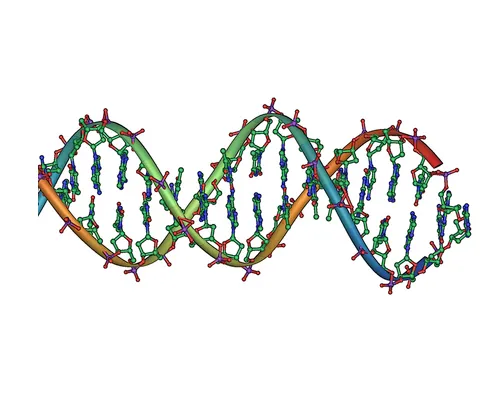
Photo: BalticServers.com, CC BY-SA 3.0, via Wikimedia Commons
A New Kind of Data Agreement
Over the past three years, a quiet transformation has occurred in the relationship between American health institutions and the technology sector. Major academic medical centers and population biobanks—custodians of millions of sequenced genomes collected under IRB protocols and HIPAA safeguards—have begun executing licensing arrangements with artificial intelligence developers. The premise is straightforward: models trained on large-scale genomic data may predict disease risk, stratify patients, and accelerate drug discovery.
The governance implications are anything but straightforward.
When the Model Is the Record
Traditional data governance rests on a simple premise: the data persists, so the obligations persist. A biobank that holds a genome knows where it is, who authorized its use, and under what restrictions. De-identification standards, data use agreements, and breach notification rules all attach to the stored record.
Machine learning unsettles this architecture. A trained model does not contain the genome in any retrievable sense, yet it encodes statistical patterns derived from thousands of individuals' DNA. Whether those patterns constitute regulated health information remains contested. Whether a model can memorize training examples—and under what conditions that memorization constitutes a privacy incident—remains an open empirical question in the privacy literature.
The result is a category of asset that has learned from the genome without legally holding it.
Three Failure Modes Identified in Early Agreements
Our review of publicly disclosed licensing arrangements and negotiated terms from the first wave of genomics-AI deals suggests three recurring gaps.
First, accountability diffusion after clinical deployment. If a model trained on a hospital's biobank produces an erroneous risk prediction that influences a patient's care, liability may be fragmented across the developer, the licensee, the deploying clinician, and the data source. Current agreements rarely specify who bears responsibility for post-deployment model errors, particularly after fine-tuning on additional datasets.
Second, consent scope mismatch. Participants who consented to research use of their genomes did not necessarily consent to commercial model development. Several negotiated frameworks rely on broad interpretation of existing research authorizations—a posture that may not survive regulatory scrutiny or participant litigation.
Third, withdrawal without a mechanism. HIPAA's right to revoke research authorization has no clear analogue when the genome has already shaped model weights. Institutions have generally acknowledged that withdrawal is impracticable post-training, but few agreements require disclosure of this limitation at the point of consent.
What Federal Regulators Should Take From the First Wave
The Food and Drug Administration's emerging framework for machine learning-enabled medical devices addresses model performance but not data provenance. The Office for Civil Rights' HIPAA modernization proposals address security but not the derivative-knowledge problem. Neither agency squarely confronts the licensing structure that has become the dominant channel through which American genomes reach commercial AI developers.
We propose three near-term measures:
- Mandatory provenance disclosure for any model marketed for clinical use, documenting the biobanks and consent regimes underlying training data.
- Kin-aware and participant-aware withdrawal accounting, requiring developers to state whether individual removal is feasible and, where it is not, requiring that limitation in consent materials.
- Clear liability allocation in data use agreements, treating post-deployment model error as a term that must be negotiated rather than defaulted to the party with the most bargaining power.
An Agenda for the Working Paper Series
This piece inaugurates a strand of IGDG working papers examining the contractual infrastructure of genomics-AI licensing. Subsequent papers will analyze the negotiated terms of specific agreement archetypes, model memorization risk in high-dimensional genomic data, and comparative approaches from the EU's AI Act and the UK's biobank access regimes.
The window for thoughtful governance is narrowing. Each new licensing agreement, executed under yesterday's assumptions, hardens norms that will be difficult to dislodge. The time to decide whether a model that has learned from your genome owes you anything is before the model ships.